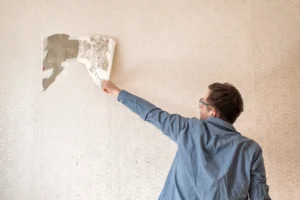
Once the festive season ends, you may find that your walls tell the story. Sticky hook marks, peeled paint, nail holes and tape residue are common after the decorations come down. The good news is that most marks are easy to repair at home. This guide shows how to fix wall damage from decorations, step by step, and explains when it is better to call a professional.
Check the Damage Before You Start
Look closely at each wall in good light. Different marks need different fixes, so sort them first. You may see sticky residue or shiny patches where adhesive hooks and tape sat. You may see small areas where paint peeled away with a strip. Nail holes, pin holes and screw holes are common around mantelpieces and door frames. Wallpaper can lift or tear, and candles can leave wax and soot. Gentle checks help too. Press suspicious patches lightly to see if the plaster is loose. Note every problem before you begin, so you can work in a sensible order, from cleaning to filling to painting.
Tools and Materials
Gather your tools first, so you can finish each repair in one go. You will need:
- A hairdryer, soft cloths and a sponge
- Mild washing-up liquid or gentle detergent
- A filling knife and ready-mixed filler
- Fine and medium sandpaper, plus a sanding block
- Primer or stain-blocking primer for bare patches
- Matching paint, a small brush and a mini roller
- Masking tape, a dust sheet and a vacuum or damp cloth for dust
- Decorator’s caulk, if gaps have opened along skirting boards or frames
- A dust mask and safety glasses for sanding
Buy small amounts of filler and primer. A little goes a long way, and fresh products work better than old ones.
Remove Adhesive Hook Marks from Paint
Starting with the residue is important. To remove adhesive hook marks from paint, work gently, because harsh scrubbing can lift the paint. Always test your method on a hidden spot first. These options work well, from gentle to stronger:
- Warm the mark with a hairdryer on a low setting, and rub gently with a soft cloth
- Wipe with a damp cloth and a few drops of mild washing-up liquid
- Roll the residue off with your finger, or press and lift with a piece of fresh tape
- Use a small amount of a suitable adhesive remover on a cloth, following the product label
- Wipe the area clean with a damp cloth, then dry it
Avoid soaking the wall, using sharp tools or scrubbing with abrasive pads, because these can damage the surface. If the adhesive strip is still on the wall, remove it correctly. Hold the base of the hook, and pull the tab straight down and slowly parallel to the wall, stretching it as far as it goes. This releases the adhesive without tearing the paint. If the mark remains shiny after cleaning, the paint sheen has changed, and a light touch-up may be needed.
Fix Peeled or Torn Paint
Sometimes paint comes away with the strip. Do not leave it, because the edges can lift further. Gently scrape away any loose flakes until you reach firm paint. Sand the edges lightly, so the rough step between the bare patch and the painted wall disappears. This is called feathering. Wipe away the dust with a damp cloth. If the plaster is bare or patchy, apply a thin coat of primer and let it dry. Then fill any dents with a little filler, sand smooth and prime again. Finally, paint the area with thin, even coats, as described in the touch-up section below. Work patiently, because the preparation decides how invisible the repair looks.
How to Fill Nail Holes in Wall
Knowing how to fill nail holes in wall surfaces properly is the most useful skill for a neat finish. Follow these steps:
First, clean the area. Pick off loose paint, and wipe away dust. Next, press a little ready-mixed filler into the hole with a filling knife, and smooth it level with the wall. Leave it very slightly proud, because filler shrinks a little as it dries. Let it dry fully, following the product instructions. Sand it lightly with fine paper until it is flush with the wall, and wipe off the dust. Prime the filled spot, so the paint does not soak in unevenly and leave a dull patch. Then paint over it.
For larger or deeper holes, fill in thin layers and let each layer dry before the next. For holes that go all the way through plasterboard, use a self-adhesive mesh patch and cover it with filler, feathering the edges. In masonry or brick walls, use a filler suited to masonry. Do not rush the drying. Damp filler shows through paint and may crack as it dries.
Touch Up Paint on Walls
To touch up paint on walls so that the repair vanishes, preparation and matching matter. Start by finding the original paint. Check for a leftover tin, and note the colour name, brand and finish. Landlords and tenants may need to ask the landlord for details. If you do not have the paint, a decorating shop can often match a small sample from the wall.
Paint ages and fades, so even the right colour can look different on an older wall. Test a small hidden patch first, and let it dry, because wet paint looks darker. Use a small roller rather than a brush for walls, because a roller leaves the same texture as the rest of the wall. Apply thin coats, and feather the edges outwards, rather than leaving a hard line. Allow each coat to dry fully, and apply a second coat if needed.
If the touch-up still shows, repaint the whole wall from corner to corner. A complete wall hides small differences in colour and sheen. This costs more time but gives a much better result, especially on older walls or in strong light. The British Coatings Federation provides general information about paints and coatings.
Wallpaper, Wax, Soot and Other Marks
Christmas can leave other marks. For lifted wallpaper edges, apply a little wallpaper paste with a small brush, press the edge flat and wipe away any excess. For small tears, glue the edges back, or patch with a matching piece. For candle wax, let it harden, scrape off the surface gently, then place absorbent paper over it and warm it with a hairdryer to lift the rest. For soot or smoke marks, wipe gently with a dry cloth first, then a damp one with mild detergent, testing a hidden spot. For greasy fingerprints, wipe with a damp cloth and a drop of washing-up liquid. For glitter, use a lint roller or sticky tape, then wipe.
Tenants: Protect Your Deposit
If you rent, tidy up before you leave. Small, careful repairs often mean fewer deductions. Take dated photos of your walls before and after, and keep them with your tenancy documents. Fill small nail holes, and clean off adhesive marks. Ask your landlord before you repaint, and ask for the paint colour. If marks are old or part of normal living, they may count as fair wear and tear, which landlords cannot deduct from your deposit. Your deposit should be protected in an approved scheme, and the GOV.UK guidance on tenancy deposit protection explains how the process works. If you disagree about deductions, use the scheme’s dispute process.
Landlords: What Counts as Fair Wear and Tear?
Landlords should separate normal wear from damage. Faded paint, small scuffs and a few very small pin marks from ordinary living are usually fair wear and tear. Large holes, torn wallpaper, burn marks, heavy staining and peeled paint across wide areas are more likely damage. Record the condition of walls at the start and end of each tenancy with dated photos, and compare them fairly. Be clear with tenants about what is allowed. Good records and fair treatment avoid disputes and keep relations positive.
When to Call a Professional
Some damage is more than a quick fix. Consider a professional if:
- Large areas of paint have peeled, or the plaster is crumbling
- You have many holes, or holes in plasterboard or ceilings
- Water stains, damp patches or mould are present
- Walls are textured, or you cannot match the colour or sheen
- You want a flawless finish before a sale, a check-out or a new letting
- You do not have the time or tools to prepare the surface properly
A tradesperson can repair the wall, match the paint and blend the finish. The Painting and Decorating Association promotes standards across the trade. Ask for a written quote, and check insurance and past work.
Prevent Damage Next Year
A few simple habits protect your walls. Use removable hooks suited to the weight of the decoration, and follow the instructions. Test adhesive on a hidden spot. Hang lights on curtain poles or furniture, rather than taping them to paintwork. Keep candles away from walls. Remove strips slowly, and take down decorations soon after Twelfth Night, because adhesives bond harder the longer they stay. Store hooks and decorations in labelled boxes for next year.
Why Choose Housing Solutions For You?
Housing Solutions For You provides professional painting and decorating for homes and rentals across London, with careful preparation and neat finishes. Our team can fill holes, repair marks, touch up paint and repaint walls. We are also a full property maintenance team. If decorations damaged doors or skirting boards, our carpentry and joinery team can repair them, and our professional cleaning services can leave the property spotless. Tenants, landlords and homeowners get clear quotes and honest advice.
Final Thoughts
Wall marks after Christmas are common, and most are easy to fix. Remove residue gently, repair peeled paint, fill holes properly and match your touch-up paint carefully. If the damage is larger or you need a flawless finish, call a professional. Housing Solutions For You is ready to help you fix wall damage from decorations and refresh your London home or rental. Start the new year with clean, fresh walls.
“Call us today at +44 7984 122 111 and let’s chat, or visit us at London, UK.”